Film photography has made a major comeback among photography enthusiasts, collectors, and creative artists. Many beginners are now purchasing vintage and modern cameras to experience the unique charm of analog photography. However, one of the first challenges new users face is learning how to load 35mm film into a camera system correctly without damaging the film roll.
Understanding the correct film loading process is essential because even a small mistake can ruin an entire roll of photos. Whether someone owns a manual film camera, an automatic film camera, or a compact point and shoot camera, the process becomes much easier after a little practice.
This beginner-friendly film camera loading tutorial explains every important step, from opening the camera back to checking whether the film transport system is working properly. It also covers common mistakes, troubleshooting tips, and advice for anyone interested in how to start film photography.
Understanding How a 35mm Film Into a Camera Works
Before learning how to load film camera models correctly, it helps to understand the basic components inside a film camera. A traditional 35mm film camera uses a light-sensitive film cartridge that moves through the camera body while photos are captured.
Inside the camera, the film leader stretches across the take-up spool while the sprocket teeth help move the film smoothly after every shot. The shutter button captures the image, while the film advance lever moves the film into position for the next exposure.
Most cameras also include:
- Rewind knob
- Rewind crank
- Exposure counter
- Camera door
- Film compartment
- Film rewind release
These components work together to ensure the film loading process runs smoothly.
For anyone wondering how 35mm film into a camera works, the concept is fairly simple. Light passes through the lens and exposes the 35mm film each time the shutter opens. Once the entire film roll is exposed, the user must rewind the film back into the cartridge before removing it.
What Is Needed Before Loading 35mm Film Into a Camera
Anyone learning how to insert 35mm film should first gather a few essentials:
- A compatible film camera
- Fresh 35mm film
- A clean indoor environment
- Basic knowledge of the camera model
Many beginners searching for a beginner film camera guide often overlook lighting conditions. Film should ideally be loaded away from direct sunlight to avoid accidental exposure.
Popular film stocks include Kodak Gold, Kodak ColorPlus, Fujifilm Superia, and Ilford HP5. Beginners interested in how to load Kodak 35mm film will find that the process is almost identical regardless of brand.
Step-by-Step Guide on How to Load 35mm Film Into a Camera
Learning how to load film into a 35mm camera becomes simple when the process is broken down into steps.
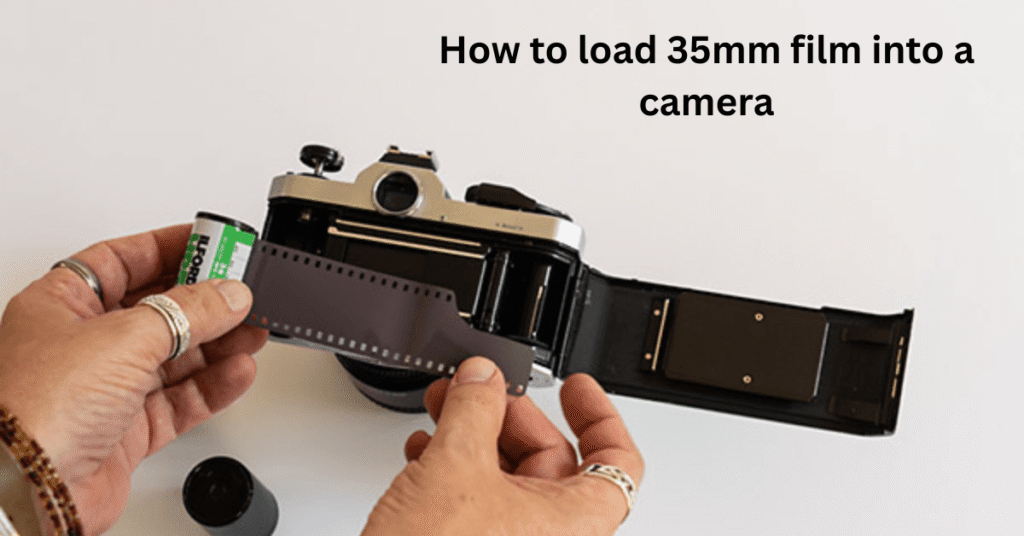
Step 1: Open the Camera Back
The first step in loading 35mm film involves opening the camera door carefully. Most cameras require pulling the rewind knob upward to unlock the back.
Once opened, the film compartment becomes visible.
Step 2: Insert the Film Roll
Place the film cartridge into the film compartment securely. Push the rewind knob back down so the film roll stays locked in place.
This step is important for anyone learning how to put film in a 35 mm camera or how to load 35mm film into a camera model.
Step 3: Pull the Film Leader Across
Next, gently pull the film leader across the camera body toward the take-up spool.
The film should align properly with the sprocket teeth. If alignment is incorrect, the film transport system may fail.
Step 4: Attach Film to the Take-Up Spool
Insert the edge of the film leader into the slot on the take-up spool.
Advance the film slightly using the film advance lever to ensure the film catches correctly.
This process is essential for anyone trying to understand how to put a 35mm film into a camera system safely.
Step 5: Advance the Film
Use the film advance lever once or twice while observing whether the rewind crank rotates.
If the rewind knob spins slightly, the film loading process is successful.
Step 6: Close the Camera Back
Carefully close the camera back until it locks securely.
Afterward, continue advancing the film until the exposure counter reaches “1”.
At this stage, the camera is ready to shoot.
How to Load Film Into Different Camera Types
Different cameras handle film loading slightly differently. Understanding the variations helps prevent mistakes.
How to Load Film Into an SLR
Anyone searching for how to load film into an SLR should know that SLR cameras typically provide more manual control.
The user usually needs to manually guide the film leader onto the take-up spool before advancing the film.
Popular SLR cameras include Canon AE-1, Nikon FM2, Pentax K1000, and Minolta X-700.
How to Load Film Into Automatic Camera Models
Many beginners wonder how to load film into automatic camera systems because these cameras often automate the process.
In most automatic cameras, the user only inserts a film roll into the compartment and closes the camera door. The camera automatically advances the film.
This process is common in compact point and shoot camera models.
How to Load Manual Film Camera Systems
Learning how to load manual film camera models requires slightly more attention.
The film leader must align carefully with the sprocket teeth before advancing. Manual cameras do not correct mistakes automatically.
Loading Film Into Vintage Cameras
Collectors interested in loading film into vintage camera models should inspect the camera seals and mechanics before use.
Older cameras sometimes have weak film transport systems that can damage film.
Camera-Specific Loading Tips
Many users search for instructions tailored to their camera brand.
How to Load Film Into Canon AE-1
Anyone researching how to load film into canon ae-1 should carefully attach the film leader to the spool and confirm smooth advance movement.
Canon AE-1 cameras are beginner-friendly but require proper spool alignment.
How to Load 35mm Film Into Nikon Camera Models
Those searching how to load 35mm film into nikon camera systems or how to load film into a nikon 35mm camera should ensure the rewind knob rotates while advancing.
Nikon film cameras are known for reliable film loading mechanisms.
How to Load Film Into Olympus Camera Models
People searching for how to load film into Olympus camera systems often use compact automatic cameras.
Most Olympus models automatically pull the film into position once the back closes.
How to Load Film Into a Heyday 35mm Camera
Users searching how to load film into Heyday 35mm camera devices should carefully follow the printed film alignment guides inside the camera body.
How to Load Film Into a 35mm Minolta Camera
Anyone learning how to load film into a 35mm Minolta camera should confirm that the film leader fully reaches the spool before closing the back.
Common Film Loading Mistakes Beginners Make
Understanding common film loading mistakes can save both time and money.
Film Not Catching Properly
One of the biggest problems beginners face is improper spool engagement.
This often leads to questions like why is my film not loading properly.
If the rewind crank does not rotate during advance, the film likely failed to attach.
Opening the Camera Too Early
Opening the camera back before rewinding can expose the entire film roll to light.
Pulling the Film Too Hard
Excessive force can tear the film leader or damage the sprocket teeth.
Ignoring the Exposure Counter
The exposure counter helps confirm proper advancement. If the number does not increase, the film may not move correctly.
How to Know If Film Loaded Correctly
Many beginners worry about how to know if the film is loaded correctly.
There are several easy signs:
- The rewind knob rotates while advancing
- The film advance lever feels smooth
- The exposure counter changes numbers
- The film transport mechanism sounds normal
If these signs appear, the film loading process likely succeeded.
How to Rewind and Remove Film Safely
After finishing the roll, the film must be rewound carefully.
How to Rewind 35mm Film
People learning how to rewind 35mm film should first press the film rewind release button.
Next, rotate the rewind crank gently until tension disappears.
This indicates the film has returned safely into the cartridge.
How to Remove Film From a Camera
Those searching for how to remove film from camera systems should open the camera door only after rewinding completely.
The film cartridge can then be removed safely.
How to Process 35mm Film Into a Camera
After shooting, many beginners become curious about how to process 35mm film.
The film can either be developed at home or sent to a professional film lab.
Color film usually requires C-41 processing, while black-and-white film uses separate chemicals.
Many photography enthusiasts in South Asia now search for 35mm film into a Camera Pakistan resource because film photography communities are growing rapidly in the region.
Helpful Tips for New Film Photographers
Anyone learning how to use a 35mm film into a camera system should practice loading inexpensive film first.
A few helpful beginner tips include:
- Always load film indoors
- Never force the film advance lever
- Keep extra batteries for automatic cameras
- Read the camera manual carefully
- Store unused film in cool conditions
These small habits help users load film properly and avoid unnecessary damage.
Can a 35mm Film Into a Camera Be Converted to Digital?
A growing number of users ask whether 35mm Film Into a Camera can be converted to digital.
In most cases, traditional film cameras cannot easily become true digital cameras. However, some experimental digital backs and scanning accessories exist for specific models.
Still, most photographers continue using analog photography cameras for their unique image quality and shooting experience.
Why Film Photography Still Matters
Modern smartphones and digital cameras dominate photography today, but film photography continues to attract artists and hobbyists.
The slower creative process encourages patience, intentional composition, and appreciation for each frame.
For beginners learning how to load analog camera film, the experience often becomes part of the artistic journey itself.
Whether someone owns a manual film camera, a compact point and shoot camera, or a professional SLR, understanding proper film loading techniques helps build confidence.
Final Thoughts
Learning how to load 35mm film into a camera system may feel intimidating initially, but the process becomes natural with practice.
From inserting the film cartridge to checking the exposure counter, every step plays an important role in protecting images and ensuring smooth operation.
This film camera setup guide covered everything from how to load camera film to troubleshooting common problems with film transport systems. It also explained how to load 35mm film into a camera safely across different camera styles and brands.
Whether someone wants to learn how to put film in camera models for creative photography or simply explore vintage equipment, mastering film loading is one of the first and most rewarding skills in film photography.
With patience and practice, even complete beginners can confidently enjoy the timeless experience of shooting on 35mm film into a camera.